
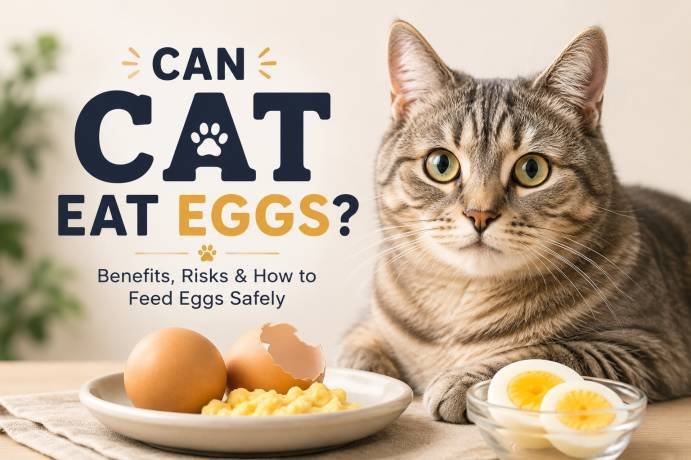
Yes, cats can eat eggs, but only when fully cooked and served plain. Raw eggs carry Salmonella and E. coli. Raw egg whites also contain avidin, which blocks biotin and can cause skin and coat problems. Scrambled or boiled eggs without oil, butter, or salt are safe in very small portions. Treats like eggs should never make up more than 10 percent of your cat’s daily calories. For a 10 pound cat, that is about one tablespoon of cooked egg a few times per week.
Introduction
Imagine this. Your cat is staring at you while you scramble eggs for breakfast. Those big eyes follow every move of the spatula. You wonder, could a tiny bite really hurt?
According to a 2025 survey by the American Veterinary Medical Association, nearly 42 percent of cat owners have fed their cat human food as a treat. Eggs are one of the most common kitchen foods people ask about. The short answer is yes, cats can eat eggs safely, but there are rules you must follow.
A plain cooked egg is packed with protein, amino acids, and vitamins that support your cat’s muscles, immune system, and fur health. But a raw egg or one cooked in butter and salt can cause serious problems. This guide walks through every type of egg. You will learn exactly what is safe, what is risky, and how to serve eggs as a healthy occasional treat.
Can Cats Eat Raw Eggs? Why It Is Never Worth the Risk
Raw eggs are not safe for cats. The Centers for Disease Control (CDC) states that raw eggs can carry Salmonella and E. coli. These bacteria cause vomiting, diarrhea, lethargy, and in severe cases, organ damage. Cats can also pass these bacteria to humans through their saliva or stool.
But bacteria are not the only danger. Raw egg whites contain a protein called avidin. Avidin binds to biotin, a B vitamin that keeps skin healthy and fur shiny. When a cat eats raw egg whites repeatedly, biotin gets blocked. Over time, this leads to hair loss, scaly skin, and a poor coat.
Some people argue that wild cats eat raw eggs from bird nests. That is true, but wild cats have different gut bacteria and immune systems. They also eat whole prey with feathers and bones, not just a raw egg from a grocery store. Domestic cats are more vulnerable to foodborne illness.
Always cook eggs to an internal temperature of 160 degrees Fahrenheit. No shortcuts.
Can Cats Eat Scrambled Eggs? The Best Way to Prepare Them
Plain scrambled eggs are a great option for cats. They are soft, easy to chew, and highly digestible. A medium egg provides about 6 grams of protein plus vitamins A, B12, D, E, iron, and zinc. All of these support a healthy cat.
The biggest mistake people make is adding oil, butter, or cheese. One teaspoon of butter adds about 35 extra calories and 4 grams of fat. That might not sound like much, but for a small cat, it can trigger vomiting or even pancreatitis. Pancreatitis is a painful inflammation of the pancreas, and it can be serious.
Here is how to make cat safe scrambled eggs. Crack one egg into a bowl and whisk lightly. Heat a nonstick pan on low heat. Do not add any oil or butter. Pour the egg in and scramble gently until fully cooked. No runny parts remain. Let the egg cool completely, then chop into tiny pieces. Serve one to two teaspoons as a treat alongside your cat’s regular food.
Never add salt, pepper, garlic powder, or onion powder. Those seasonings are toxic to cats.
Can Cats Eat Boiled or Hard Boiled Eggs? A No Mess Alternative
Hard boiled eggs are just as safe and even easier to portion. One large hard boiled egg has about 78 calories and 6 grams of protein. Cats digest cooked egg protein very well because they are obligate carnivores.
But a whole egg is too much for one serving. A 7 pound cat needs only about 200 calories per day. A whole egg yolk alone is 54 calories, which is more than a quarter of their daily allowance. Overfeeding eggs leads to weight gain, and weight gain leads to diabetes and arthritis.
Follow these simple rules. Cut a boiled egg into quarters or smaller pieces. Feed just one or two small chunks, about a teaspoon total. Limit eggs to two or three times per week. Remove the shell completely before serving. The shell can be a choking hazard and may carry bacteria. However, the thin membrane just under the shell is safe and contains glucosamine, which supports joint health.
The table below shows which egg preparations are safe.
| Preparation Method | Safe for Cats | Key Rules |
|---|---|---|
| Raw or uncooked | No | Risk of Salmonella, E. coli, and biotin deficiency from avidin |
| Scrambled plain | Yes | No oil, butter, salt, or seasonings; low heat; fully cooked |
| Boiled or hard boiled | Yes | Remove shell; feed in small pieces one to two teaspoons |
| Fried with oil or butter | Avoid | Added fat can cause pancreatitis and weight gain |
| Poached plain | Yes | Ensure yolk is fully cooked; no seasoning |
Can Cats Eat Egg Yolk or Egg White? Which Part Is Better?
Both the yolk and the white are safe when cooked, but they serve different purposes.
Egg whites are almost pure protein with very little fat. They are the leanest option. If your cat needs to lose weight or has a history of pancreatitis, feed only cooked egg whites. Cooking destroys the avidin, so there is no biotin risk.
Egg yolks are nutrient dense but high in fat. A single yolk contains choline, a vitamin like nutrient that supports nerve function, muscle movement, and liver health. Yolks also provide vitamins D, B6, and B12. But because yolks are calorie heavy, give them in very small amounts. No more than a quarter of a yolk per serving.
Here is a simple rule. For lean protein, use mostly cooked egg whites. For a nutrient boost, add a tiny bit of cooked yolk. But only if your cat is at a healthy weight.
Can Cats Eat Egg Shells? Calcium Source or Choking Hazard
Eggshells are mostly calcium carbonate, about 94 to 97 percent. In theory, finely ground eggshell powder can act as a natural calcium supplement. But feeding eggshells comes with real risks.
Whole or large pieces of shell are a choking hazard. They can also irritate the throat and digestive tract. Raw shells can carry Salmonella just like raw eggs. If you want to use shells, you must bake them at 250 degrees Fahrenheit for 10 minutes to kill bacteria, then grind them into a fine powder.
Even then, too much calcium can cause imbalances. Too much calcium can lead to kidney problems or poor bone development. Before adding any supplement, talk to your vet. For most cats eating a balanced commercial diet, extra eggshell calcium is not needed.
Can Kittens Eat Eggs? Special Considerations
Kittens can eat tiny amounts of cooked eggs, but their needs are more sensitive than adult cats. Kittens require a complete, formulated diet to support rapid growth. Eggs should never replace kitten food.
A tiny piece of plain scrambled or boiled egg, about half a teaspoon, can be offered as an occasional taste. Watch for any signs of digestive upset. Kittens’ immune systems are not fully developed, so undercooked or raw eggs pose a higher risk. Always cook eggs thoroughly and start with a very small portion.
If the kitten shows any loose stool or vomiting, stop eggs and wait until they are older.
Are Some Cats Allergic to Eggs? Signs to Watch For
Egg allergies in cats are rare, but they happen. Eggs are one of the more common feline food allergens. If your cat has never eaten eggs before, introduce them slowly.
Watch for these signs over 24 to 48 hours. Itchy skin, excessive grooming, or scratching. Ear infections. Vomiting or diarrhea. Hair loss or skin lesions.
If you notice any of these, stop feeding eggs immediately and call your vet. Most cats tolerate eggs without any problem. But like any new food, it is smart to monitor the first few servings.
How Many Eggs Can a Cat Eat? Portion Control and Frequency
The golden rule is simple. Treats, including eggs, should make up no more than 10 percent of your cat’s daily calories.
Here are calorie guidelines for an average cat. A 5 pound cat with low activity needs about 150 calories a day. A 10 pound neutered cat needs about 260 calories a day. A 12 pound active cat needs 300 to 350 calories a day.
A medium egg has about 66 to 78 calories. That means a whole egg would exceed the 10 percent treat limit for most cats. Instead, aim for one to two teaspoons of cooked egg per serving, two to three times per week at most. Never feed eggs as a meal replacement.
Overfeeding eggs leads to weight gain, and weight gain increases the risk of diabetes, arthritis, and heart disease.
Frequently Asked Questions (FAQ)
Can cats eat eggs every day?
No. Eggs should be an occasional treat, not a daily food. Daily eggs can lead to obesity and nutritional imbalances. Stick to two or three times per week in small portions.
Can cats eat raw egg yolk alone? Is that safer than whole raw egg?
No. Raw egg yolk still carries the risk of Salmonella and E. coli. The yolk does not contain avidin, but bacterial contamination remains a serious concern. Always cook the yolk fully.
My cat ate a raw egg by accident. What should I do?
Monitor your cat for 24 to 48 hours. Watch for vomiting, diarrhea, lethargy, or loss of appetite. If you see any of these signs, or if your cat seems weak or dehydrated, contact your veterinarian immediately. Most cats will be fine after a small amount, but bacterial infections can take a few days to show up.
Can cats eat scrambled eggs with cheese?
No. Cheese adds fat, calories, and potential lactose issues. Many cats are lactose intolerant. Cheese can cause vomiting or diarrhea. Keep eggs completely plain.
Can cats eat boiled egg shells?
Only if the shells are ground into a fine powder and baked first to kill bacteria. Whole or sharp shell pieces are a choking hazard. Always consult your vet before adding eggshell powder to your cat’s diet.
Can cats eat quail eggs?
Yes. Quail eggs are safe for cats when cooked plain. They are smaller than chicken eggs, so one whole cooked quail egg may be an appropriate single serving for an average cat. The same rules apply. Fully cooked, no seasoning, feed in moderation.
Conclusion
Eggs can be a fantastic occasional treat for your cat. Just follow three simple rules. Cook them fully. Skip all seasonings and fats. Keep portions tiny. A teaspoon of plain scrambled egg or a small chunk of hard boiled egg gives your cat a protein boost, essential amino acids, and valuable vitamins.
But eggs are not a complete diet. Your cat’s main meals should come from a balanced commercial cat food that meets AAFCO standards. Treats, including eggs, should never exceed 10 percent of daily calories.
Now you know exactly how to feed eggs safely. Keep this guide handy, and always trust your vet if you have any concerns about your cat’s diet.